Robert A. Leishear

Engineering Researcher, Author & Advocate for Safer Industry

A Career Spent Investigating The Failures Others Overlooked

Robert A. Leishear, PhD, PE, PMP, and ASME Fellow, is a mechanical and nuclear engineering researcher, consultant, and science writer whose work focuses on fluid transients, piping failures, and industrial explosions. His career combines advanced engineering research, hands-on technical experience, and journalism, driven by one enduring purpose.

Investigating preventable disasters and sharing knowledge that can help protect lives. His credentials include advanced degrees in mechanical and nuclear engineering, Professional Engineer licensure, ASME Fellowship, and specialized certifications in corrosion, coatings, and engineering analysis.

About the Book

Break the Silence: Exposing the Industrial Murder For Profit

“What happens when industrial disasters are treated as inevitable instead of preventable?” Break the Silence: Exposing the Industrial Murder For Profit examines Robert A. Leishear’s decades-long investigation into failures, explosions, environmental destruction, and what he describes as institutional cover-ups across the water, oil, gas, and nuclear industries. The book brings together engineering research, published articles and years of advocacy to examine water-main failures, nuclear power plant explosions, gas pipeline disasters, offshore oil-rig explosions and oil pipeline spills. Its central argument is that technical knowledge can reveal hazards that deserve greater public scrutiny, and that preventing avoidable disasters requires the courage to challenge accepted explanations. The manuscript describes itself as the political and social counterpart to Leishear’s technical work on fluid transients, water hammer, and gas hammer.

“One way or the other, I stand against governments and industries to protect others. The stakes are too high to back down in fear. To heck with those people who murder us for profit.”

Industries Under Fire

Where Engineering Meets Accountability

Investigating The Systems, Failures, And Decisions Behind Industrial Disasters

Robert A. Leishear connects engineering research with public accountability, examining how fluid transients, water hammer, piping failures and explosion mechanisms intersect with industrial safety. His work considers disasters across drinking-water systems, nuclear facilities, gas pipelines, offshore platforms and oil infrastructure, while questioning whether established investigations have fully addressed preventable technical causes and their consequences.

Nuclear Power & Explosion Safety

Leishear examines Three Mile Island, Fukushima and other nuclear incidents, presenting his research into water hammer, fluid transients and explosion mechanisms.

Drinking Water & Infrastructure

His work investigates water-main failures, water hammer, corrosion and the potential consequences of damaged infrastructure for public health and communities.

Oil, Gas & Pipeline Disasters

From gas pipeline explosions to offshore oil-rig failures and oil spills, Leishear examines industrial failures and argues for greater attention to their technical causes. The book itself organizes these concerns across nuclear power, drinking water, gas pipelines, offshore oil rigs and oil pipelines.

Evidence That Cannot Be Ignored

Documented Disasters. Scientific Analysis. Real-World Consequences

Industrial Explosion Aftermath

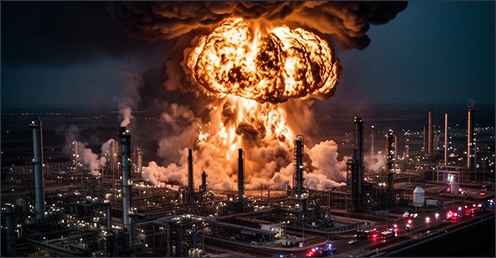
Burned landscapes, shattered infrastructure, toxic contamination, and human casualties form the devastating aftermath of industrial explosions examined throughout the book. Robert argues these tragedies are not isolated accidents but repeated failures enabled by institutional silence, ignored warnings, and profit-driven decision-making that places public safety last.

Nuclear Cooling Towers

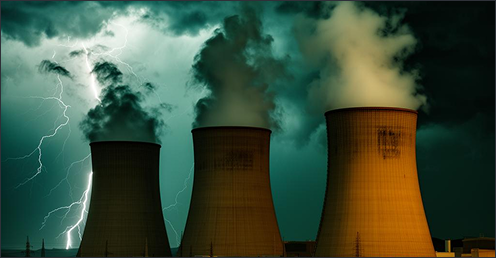
The haunting image of nuclear cooling towers becomes a symbol of concealed danger within the book. Through Three Mile Island and Fukushima analyses, Leishear examines how overlooked warning signs, flawed systems, and suppressed engineering concerns transformed preventable failures into global catastrophes with lasting consequences.

The Untold Truth Behind “Safe” Energy

The book presents a disturbing examination of nuclear disasters, arguing that many reactor explosions and failures stemmed from ignored engineering realities, institutional denial, and preventable operational failures.

What Readers and Experts Are Saying

A Disturbing, Necessary, and Courageous Investigation

Readers, engineers, and industry professionals describe Break the Silence as a deeply unsettling yet essential work. One that challenges accepted narratives and compels serious reflection on public safety, accountability, and industrial ethics.
Estimated yearly losses caused by water main breaks
0 Billion+
People reportedly exposed to lead and copper contamination
0 Million+
A potential future Fukushima-type nuclear disaster
0 Prediction

About the Author

Robert A. Leishear

ASME Fellow • PhD

Dr. Robert A. Leishear

Robert A. Leishear, PhD, PE, PMP, ASME Fellow, is a renowned consulting engineer, scientific researcher, and technical author whose career spans nuclear engineering, piping failure analysis, explosion theory, and industrial safety systems. A Fellow of the American Society of Mechanical Engineers, Leishear has authored more than 190 technical publications and dedicated decades to studying industrial disasters, fluid transient failures, and nuclear reactor safety.

His academic and professional training includes advanced research in mechanical and nuclear engineering, corrosion technology, reactor design, combustion science, and structural analysis. Through Break the Silence, he transforms years of independent research and whistleblowing into a powerful public call for accountability, transparency, and the protection of human life above industrial profit.

Years of Research
0 +
Self-Funded ($)
0 +
Published Papers
0 +

The Warning We Can No Longer Ignore

The Next Catastrophe Isn’t a Possibility — It’s a Countdown

Days
0
Hours
0
Minutes
0
Seconds
0
Robert’s research presents a chilling reality: another large-scale industrial or nuclear disaster may already be on the horizon. The question is no longer whether these failures can happen again. But whether governments, corporations, and regulators will act before more lives are lost. Break the Silence is both a warning and a demand for accountability before history repeats itself.